Learning to drive asks a lot of your brain at once. You are steering, checking mirrors, reading signs, judging other drivers and listening to your instructor, often within the same few seconds.
For many neurodivergent learners, the challenge is rarely ability. It is that a standard lesson is not always set up for the way they take in information. At Oxon Driving Tuitions, we adapt our lessons in Oxford around the learner, not the other way round.
What we mean by neurodivergent learners
Neurodivergent is a broad term for people whose brains process information differently. It includes learners who are autistic, have ADHD, are dyslexic or have dyspraxia, and some who have more than one of these.
No two learners are the same, even with the same diagnosis. So we do not start with assumptions. We start by asking what works for you.
Where our experience comes from
Our instructors have taught neurodivergent learners in Oxford for many years, and that time in the car is what we draw on most. Alongside it, we keep reading research, articles and books about autism and other conditions, so our teaching keeps improving.
We are not therapists or medical professionals. We are driving instructors who have learned, lesson by lesson, what helps.
How we adapt your lessons
These are the adjustments we make most often. We agree them with you and change them as you progress.
- A chat before your first lesson. We talk about how you like to learn, what worries you, and anything that makes lessons easier or harder. Nothing about the first lesson should come as a surprise.
- The same instructor, where possible. A familiar face and a familiar way of explaining things helps many learners feel settled.
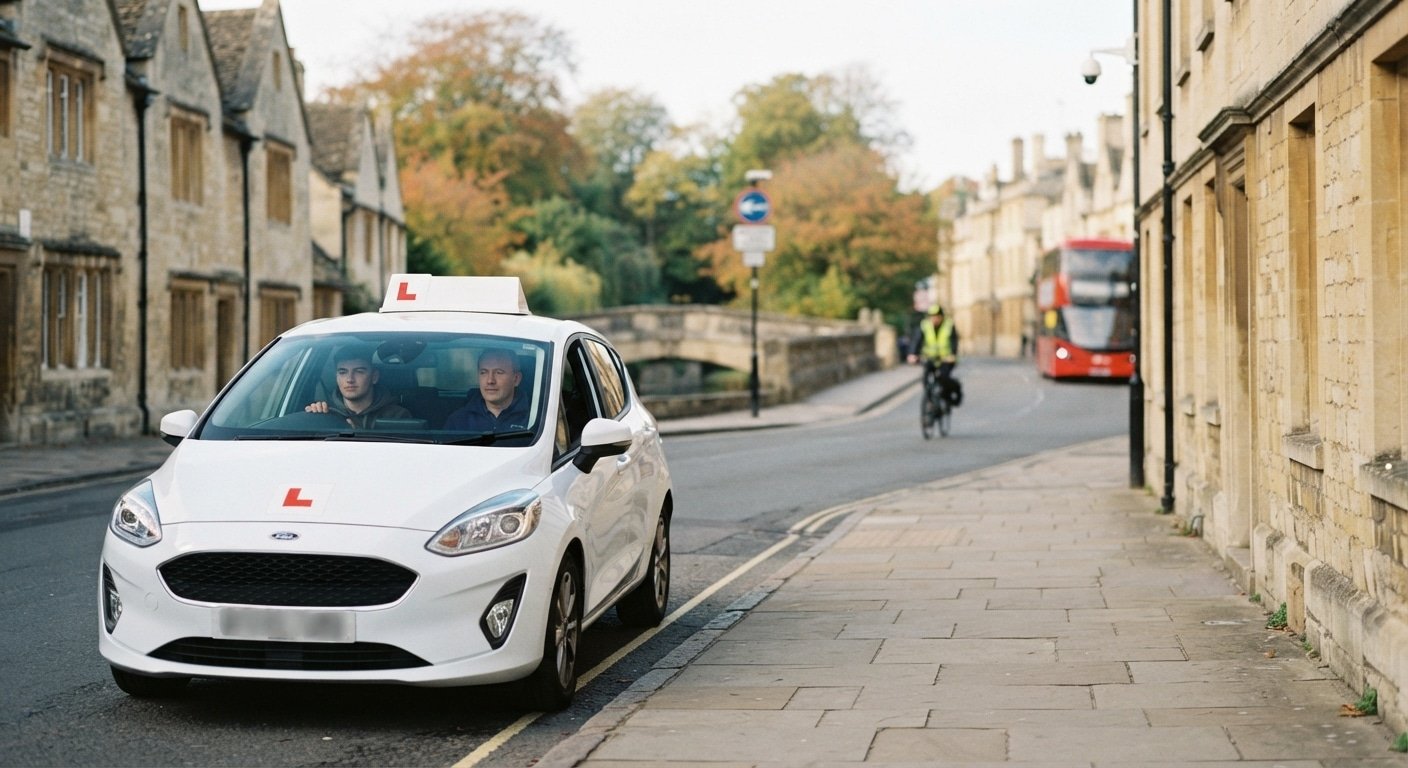
- Quiet roads to start. Early lessons happen away from busy traffic, so you can build control and confidence before moving on to busier roads.
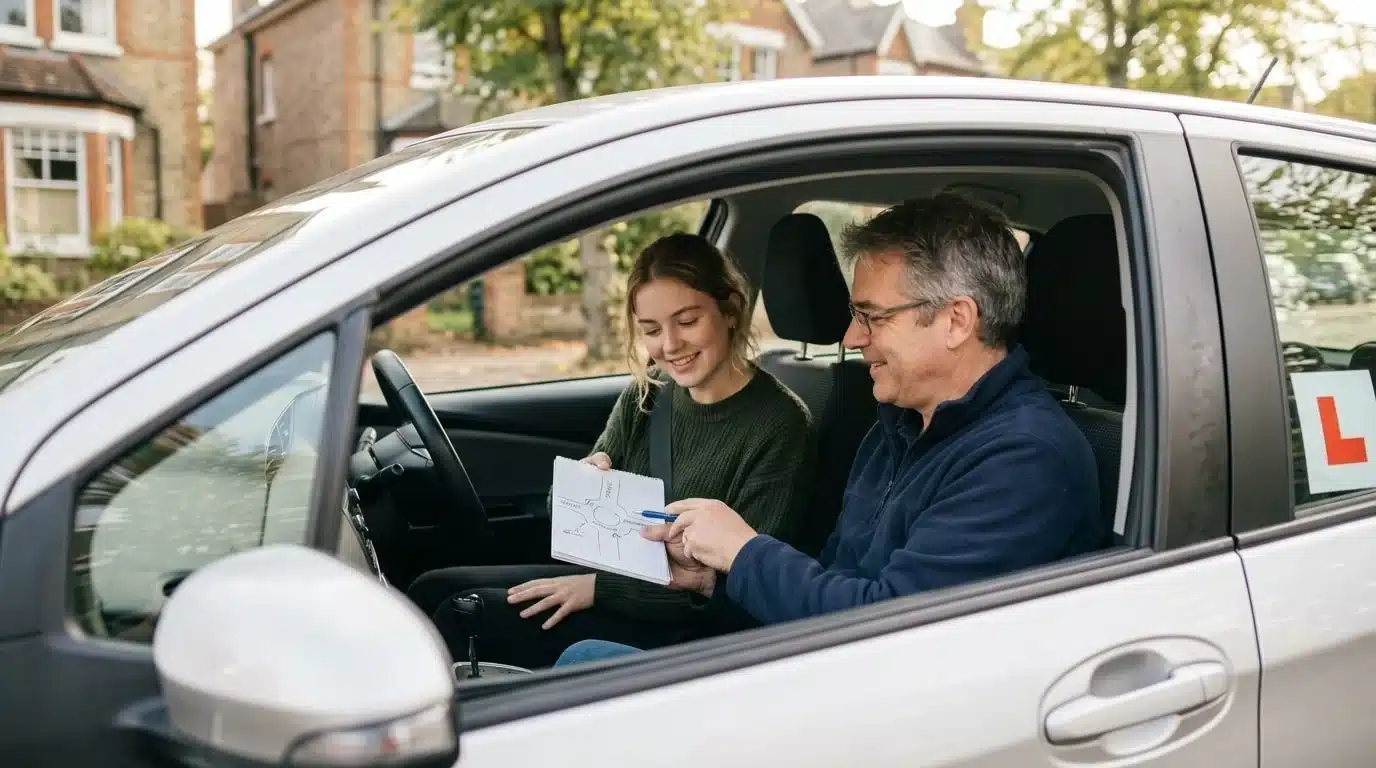
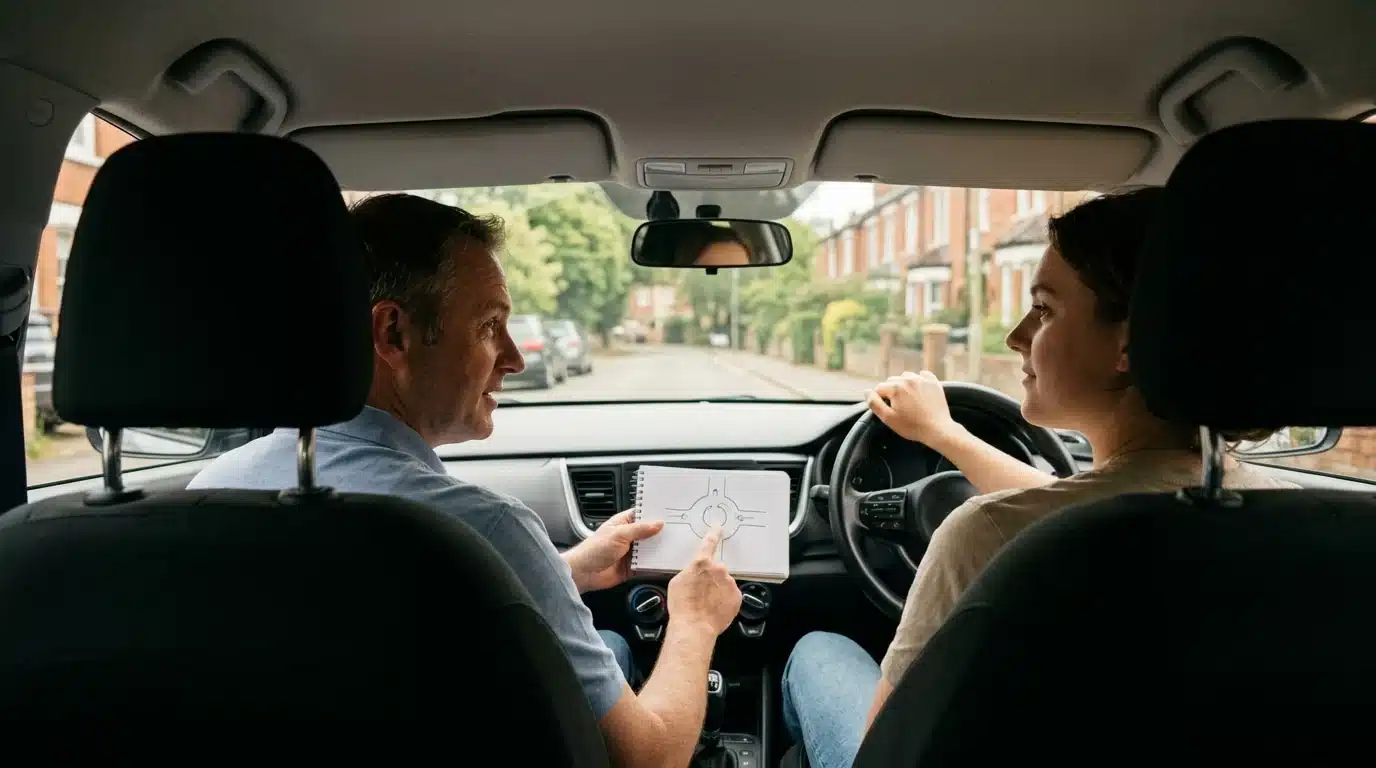
- Visual aids. Diagrams and drawings to explain junctions, roundabouts and manoeuvres, so you are not relying on spoken explanations alone.
- Breaks when you need them. A short pause is part of learning, not a sign that something has gone wrong.
- A written or visual summary after each lesson. A short record of what you covered and what comes next, so you can look back over it at your own pace.
If nerves are a big part of it for you, our article on driving anxiety when learning to drive may also help.
Why we usually recommend automatic
For most neurodivergent learners, we recommend learning in an automatic car. It is usually the easiest option.
An automatic has no clutch pedal and no gears to change. That takes several tasks away from every junction, hill start and roundabout, and leaves more attention for the road itself. For learners who find it hard to manage several things at once, that difference can be significant.
One thing to know: if you pass your test in an automatic, your licence covers automatic cars only. If you would still prefer manual, we teach that too, and our guide to automatic vs manual lessons in Oxford sets out the differences. You can also read more about our automatic driving lessons in Oxford.
Autism, ADHD and dyslexia
Autistic learners
Knowing what to expect matters to many autistic learners. The chat before your first lesson, having the same instructor and starting on quiet roads all help keep lessons predictable. Our article on teaching autistic learners to drive goes into more detail.
Learners with ADHD
For learners with ADHD, keeping attention steady across a whole lesson can be the hardest part. Breaks when needed, and an automatic car with fewer tasks to manage, both help. The summary after each lesson is a useful reminder of what you covered. Our article on teaching learners with ADHD to drive goes into more detail.
Dyslexic learners
Dyslexia affects people in different ways, and for some it goes beyond reading. Visual aids and lesson summaries help, because you are not relying on remembering spoken explanations alone. Our article on supporting dyslexic learners to drive covers this in more detail.
Help available on your theory and practical test
The DVSA offers support for learners with a reading difficulty, disability, health condition or learning difficulty. The key is to tell them when you book.
Theory test
If you have a reading difficulty, you can ask to hear the test through headphones when you book. If you send proof, such as a letter from a teacher or doctor, or an online dyslexia screening result, you can also ask for extra time on the multiple choice part, for someone to read the questions or record your answers, or for the questions to be reworded. The full details are on GOV.UK.
Practical test
When you book your practical test, say if you have a disability, health condition or learning difficulty. You still need to drive to the same standard to pass, but the examiner can make adjustments for your situation. For learners with learning difficulties, this includes adjustments to the independent driving part of the test. The full details are on GOV.UK.
Common questions
Do I need to tell the DVLA that I am autistic or have ADHD?
You do not usually need to tell the DVLA while you are learning, because your driving test assesses whether you can drive safely. You must tell the DVLA if your doctor has told you that your condition, or for ADHD your medication, affects your ability to drive safely. If you are unsure, ask your doctor.
Can I get extra time on the theory test if I am dyslexic?
You can ask for extra time on the multiple choice part of the theory test if you send the DVSA proof of your reading difficulty, such as a letter from a teacher or doctor, or an online dyslexia screening result. You can also ask to hear the test through headphones. Tell the DVSA when you book.
Is an automatic car better for neurodivergent learners?
For most neurodivergent learners we recommend automatic, as it is usually the easiest option. With no clutch or gears, there is less to manage at once, which leaves more attention for the road. If you pass in an automatic, your licence covers automatic cars only.
Will I have the same instructor for every lesson?
Where possible, yes. Many learners find that a familiar instructor and a familiar way of explaining things helps them feel settled.
Talk to us before you book
If you are autistic, have ADHD, are dyslexic or are neurodivergent in another way, you are welcome to call us on 01865 763458 or get in touch before booking. We can talk through what would help.
When you are ready, you can book your first lesson online.