If you have ADHD, you may find that the hardest part of learning to drive is not the skills themselves. It is keeping your attention steady for a whole lesson, while lots of things compete for it.
At Oxon Driving Tuitions, our instructors have taught learners with ADHD in Oxford for many years. This article explains how we adapt lessons for you. For our wider approach, including autism and dyslexia, see how we teach autistic, ADHD and dyslexic learners to drive.
ADHD affects everyone differently
Some learners with ADHD find it hard to stay focused when a lesson goes quiet. Others find busy roads overwhelming, or lose track of a series of instructions. No two learners are the same, so we start by finding out what works for you.
How we adapt your lessons
A chat before your first lesson
Before you get in the car, we talk about how you like to learn, what helps you focus and what makes it harder. Your lessons are planned around that.
Breaks when you need them
If your concentration starts to fade, we pull over somewhere safe and take a short break. It is part of learning, not a sign that something has gone wrong.
Quiet roads first
Early lessons happen on quiet roads, with fewer distractions, so you can build control before we move on to busier roads.
Visual aids
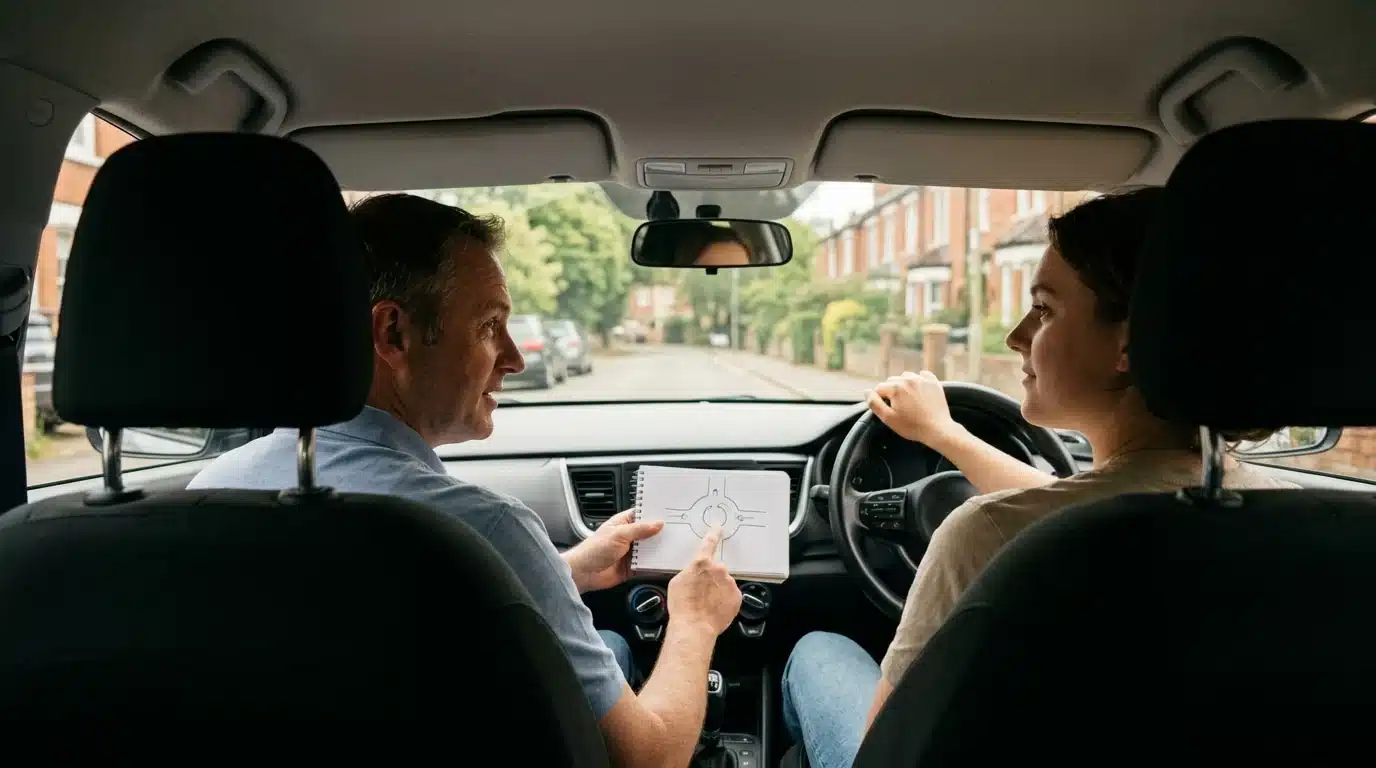
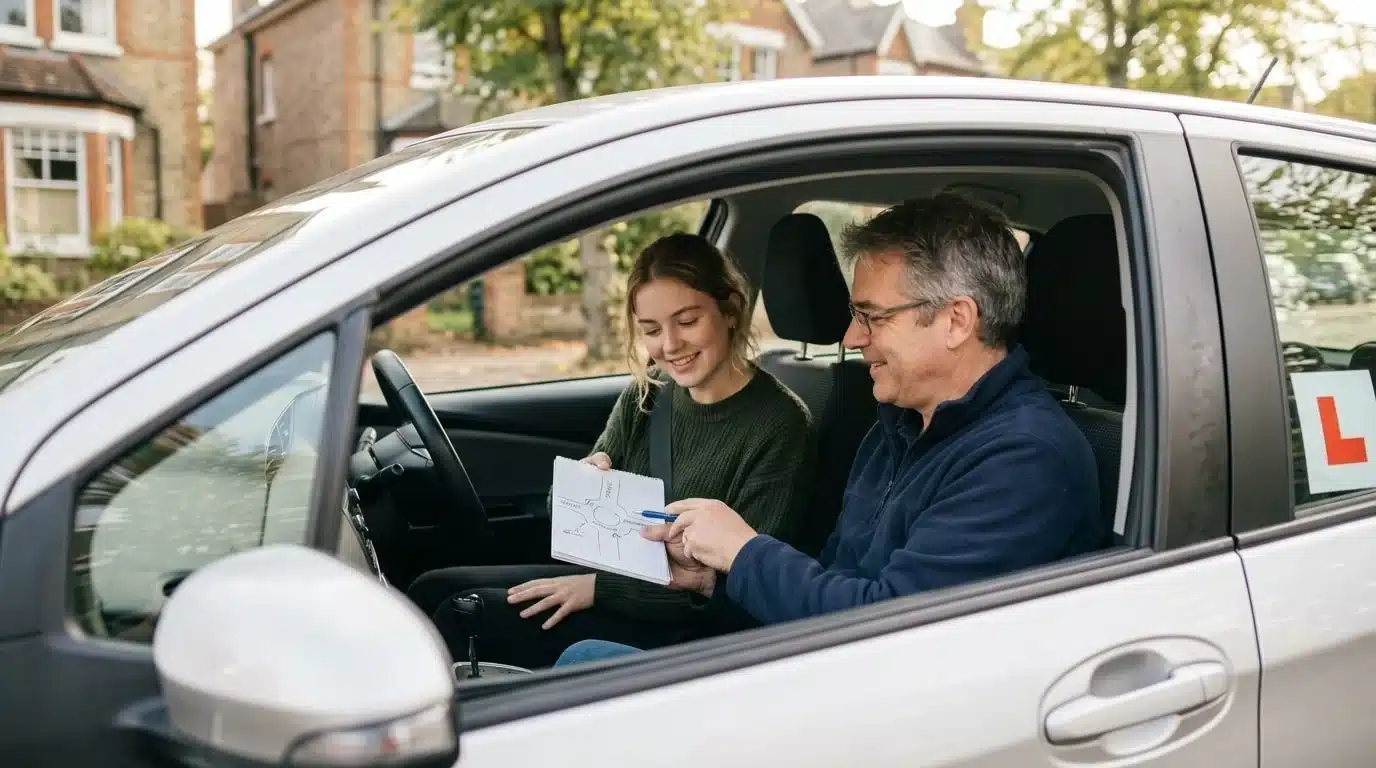
We use diagrams and drawings to explain junctions, roundabouts and manoeuvres, so you are not relying on remembering spoken explanations alone.
A summary after each lesson
After each lesson you get a written or visual summary of what you covered and what comes next. It is a quick way to pick up where you left off.
The same instructor, where possible
A familiar instructor who already knows how you learn means less time settling in, and more time driving.
Why we usually recommend automatic
For most learners with ADHD, we recommend an automatic car, as it is usually the easiest option. With no clutch and no gears to change, there are fewer tasks competing for your attention at every junction.
If you pass in an automatic, your licence covers automatic cars only. You can read more about our automatic driving lessons in Oxford, or compare the two in our guide to automatic vs manual lessons in Oxford.
Do you need to tell the DVLA?
You do not usually need to tell the DVLA about ADHD while you are learning, because your driving test assesses whether you can drive safely. You must tell the DVLA if your doctor has told you that your ADHD, or your ADHD medication, affects your ability to drive safely. If you are not sure, ask your doctor. The full guidance is on GOV.UK.
ADHD medication and driving
Some medicines, including amphetamines such as dexamphetamine, are covered by the drug driving law. According to GOV.UK, you can generally drive if the medicine was prescribed to you, you follow your doctor's advice, and it does not make you unfit to drive. If you are unsure, talk to your doctor. The details are on GOV.UK.
Your theory and practical test
When you book either test, you can tell the DVSA if you have a reading difficulty, disability, health condition or learning difficulty. On the practical test you still need to drive to the same standard to pass, but the examiner can make adjustments for your situation. See GOV.UK for the theory test and the practical test.
Talk to us first
You are welcome to call us on 01865 763458 or get in touch before booking, so we can talk through what would help. When you are ready, you can book your first lesson online.
We also teach autistic learners and dyslexic learners.