Feeling nervous about learning to drive is very common. Some learners feel it from the first lesson, others only when traffic gets busy or a test date gets close. Sweaty hands, a racing heart and a mind that goes blank at a junction are all normal reactions, and none of them mean you cannot become a safe, confident driver.
This guide explains where driving anxiety usually comes from, how we teach nervous learners in Oxford, and the practical things you can do to feel calmer behind the wheel.
What driving anxiety feels like
Driving anxiety shows up in the body and in your thinking. You might notice shaking, a tight chest, fast breathing or difficulty concentrating. You might also find yourself expecting the worst: that you will stall at the lights, that the car behind is annoyed with you, or that you will freeze at a roundabout.
These feelings are uncomfortable, but they are not dangerous on their own. With the right support they usually ease as your skills and experience grow.
Common causes
- Fear of crashing or of hurting someone else.
- Feeling overwhelmed by traffic, especially on busy roads and roundabouts.
- Feeling out of control of the car, because the skills are still new.
- A bad experience, such as a near miss, a stressful lesson or a previous test that went badly.
- Pressure from a test date, family expectations or comparing yourself with friends.
How we teach nervous learners
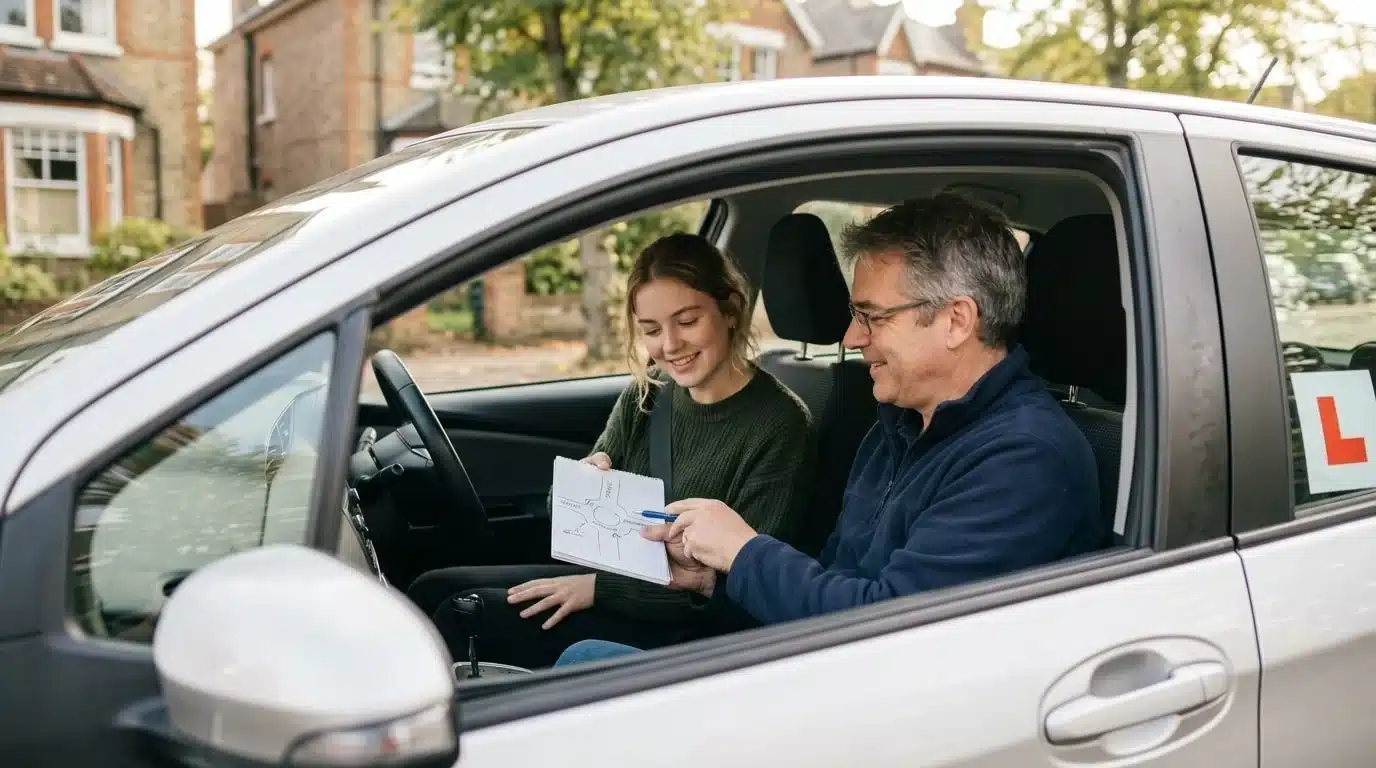
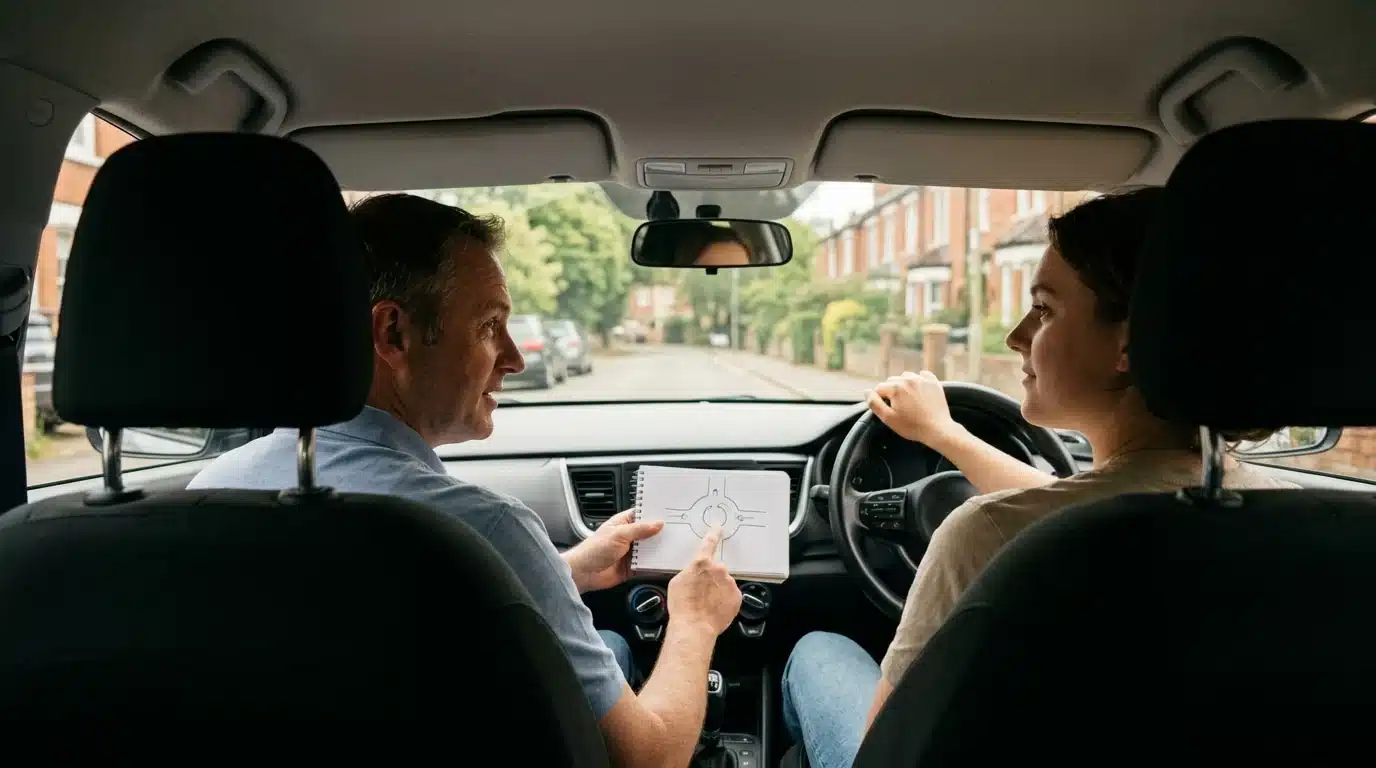
Our instructors are used to teaching anxious learners, and it is more common than people think. We start on quiet roads at a pace you are comfortable with. Nothing is sprung on you, and you will never be pushed into traffic you are not ready for.
Every lesson has a small, clear goal, so you can see your progress rather than worry about everything at once. As your confidence grows, we gradually add busier roads, longer drives and more complex junctions. Our cars have dual controls, so your instructor can help straight away if something unexpected happens.
Some nervous learners find an automatic car easier, because there is no clutch and no gear changes to think about. Our guide to automatic or manual lessons explains the difference.
Practical tips to feel calmer behind the wheel
1. Do not start alone
Most people feel braver doing something difficult with someone they trust. If you are learning, that person should be a qualified instructor. If you already have a licence but have not driven for a while, start with an experienced friend or family member beside you, then build up to short trips on your own. Refresher lessons are designed for exactly this.
2. Learn the rules, not just the answers
Knowing what to do in each situation, and what other drivers are likely to do, takes a lot of the fear away. Try to understand the Highway Code rather than memorising answers for the theory test. You will feel far more settled when a situation is familiar.
3. Get comfortable before you move
Take your time setting your seat, mirrors and steering position before every drive. A car that fits you properly feels easier to control. If you ever feel overwhelmed, find a safe place to pull over, breathe slowly and take as long as you need before carrying on.
4. Build up gradually
Start with quiet roads and calmer times of day, then add busier traffic, dual carriageways and driving in the dark as your confidence grows. There is no prize for doing everything at once.
5. Focus on what you can control
You cannot control other drivers. You can control your speed, your position and the space you leave around you. Planning ahead and leaving a good gap gives you more time to think, which is one of the best ways to stay calm.
6. Do not rush it
Everyone learns at a different pace. Some learners need longer on roundabouts, others on parking. Moving on when you are ready, rather than when a schedule says so, is what makes confidence last.
When to get extra support
For many learners, anxiety eases with practice and a patient instructor. For others it is part of a wider problem with anxiety. If it affects your daily life, speak to your GP. In England, adults can also refer themselves to NHS Talking Therapies for anxiety without a GP referral.
If you have been diagnosed with anxiety and it affects your ability to drive safely, you must tell the DVLA. GOV.UK explains this on its anxiety and driving page, and our post on driving and mental illness covers it in more detail.
Nervous about the test itself?
Test nerves are a separate challenge, and they usually ease once you know what to expect. Our guide on preparing mentally for your driving test has practical ideas for the days before and the morning of your test.
Frequently asked questions
Is it normal to be nervous when learning to drive?
Yes. Many learners feel nervous, especially at the start and as their test gets closer. Nerves usually ease as your skills and experience grow.
Can a nervous learner still pass first time?
Yes. Being nervous does not stop you passing. What matters is being properly prepared, so your instructor can tell you honestly when you are ready.
Is an automatic easier if I am anxious?
Many nervous learners find it easier, because there is no clutch and no gear changes to manage. That leaves more attention for the road around you.
Do I have to tell the DVLA about anxiety?
You must tell the DVLA if you have been diagnosed with anxiety and it affects your ability to drive safely. Feeling nervous as a learner is not the same thing.
If nerves are holding you back, we are happy to talk it through before you book. Call us on 01865 763458, or see our lesson prices first.