The clocks go back one hour at 2am on Sunday 25 October 2026. From that week, many evening lessons in Oxford will start in daylight and finish in the dark. The next few months will also bring rain, fog and the odd icy morning.
If you are learning to drive, winter is not something to wait out. Driving in the dark and in poor weather is part of being a safe driver, and the best place to learn it is with an instructor beside you. This guide covers what changes, what the Highway Code says, and what happens to your test if the weather turns.
What changes when the clocks go back
The biggest change is light. Late afternoon and evening lessons that were in daylight the week before will now be partly or fully in the dark.
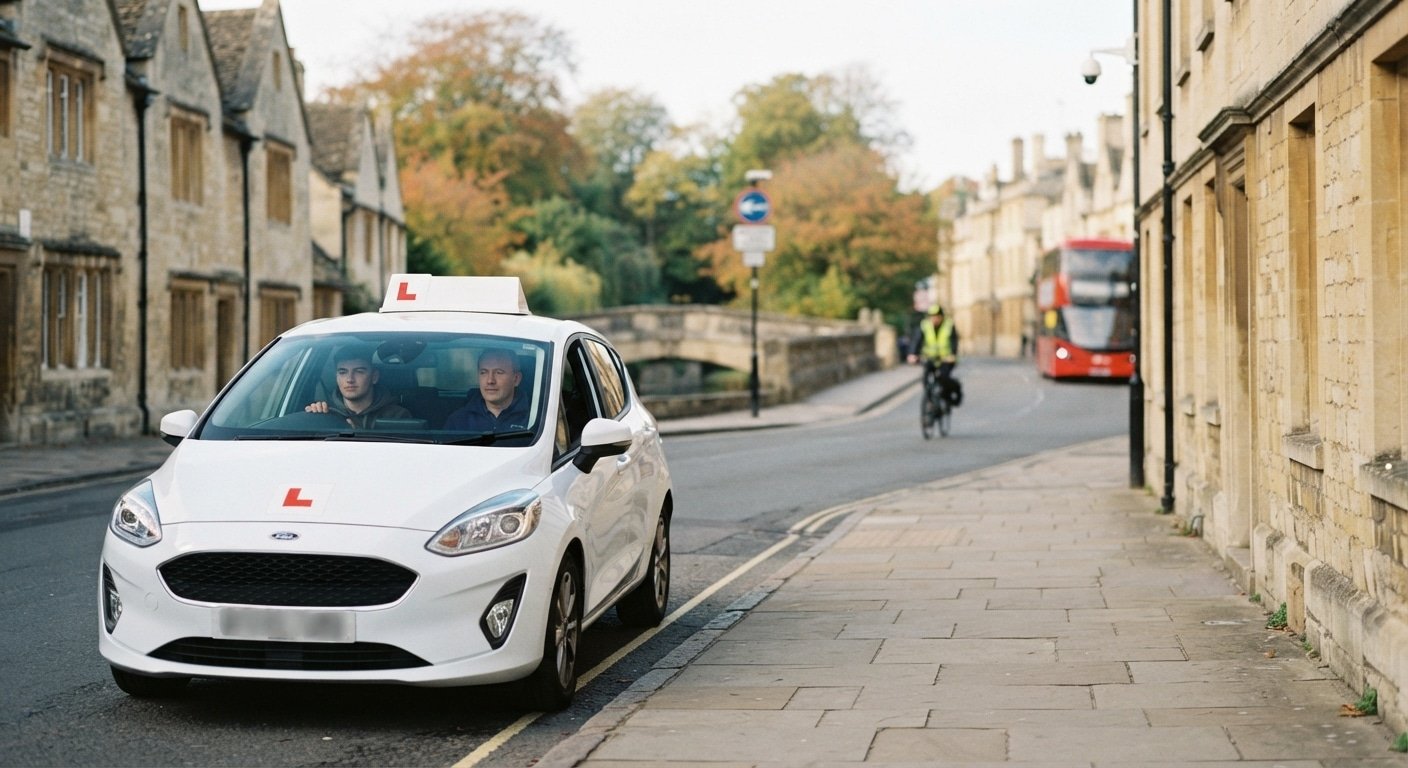
Most roads around Oxford have 20mph or 30mph limits, and they are busy with people on foot and on bikes. In the dark, a pedestrian in a dark coat or a cyclist with weak lights is much harder to see. Look further ahead, scan the pavements, and give yourself more time near schools, shops and bus stops.
Driving in the dark
The Highway Code sets out clear rules on lights:
- You must use headlights at night, except on roads with lit street lighting. Night means from half an hour after sunset to half an hour before sunrise.
- You should use dipped headlights at night in built-up areas and in dull daytime weather, so that others can see you.
- You must not use your lights in a way that dazzles other road users.
- If oncoming headlights dazzle you, slow down, and stop if you need to.
Main beam helps on unlit roads out of town, but dip it as soon as you see a vehicle coming towards you or catch up with one in front.
Learn where every light control is, so you can find it without looking down. During your test, the examiner may ask you to show how to switch on your dipped headlights while you are driving.
Rain and wet roads
The Highway Code says stopping distances in the wet are at least double those on dry roads, because your tyres have less grip.
- Leave a much bigger gap to the vehicle in front.
- If the steering suddenly feels light, water may be stopping the tyres gripping. Ease off the accelerator and slow down gradually.
- Spray from other vehicles makes it harder to see and be seen, so use dipped headlights.
- Take extra care around pedestrians and cyclists.
Fog
You must use headlights when visibility is seriously reduced, which generally means you cannot see more than 100 metres. You may use fog lights then, but you must switch them off once visibility improves, because they dazzle other drivers and can hide your brake lights.
In fog, drive at a speed that lets you stop well within the distance you can see clearly. Do not speed up to get away from a vehicle that is too close behind you.
Ice and snow
The Highway Code advises you not to drive in icy or snowy weather unless your journey is essential. On icy roads, stopping distances can be ten times greater than on dry roads.
Before you set off, you must clear snow and ice from every window, and make sure your lights and number plates are clean and readable. Clear snow off the roof as well, so it cannot slide onto your windscreen or fall into the path of other road users.
If you do have to drive on ice:
- drive slowly, in as high a gear as possible, and accelerate and brake very gently
- slow down on the straight before a bend, then steer smoothly round it
- if the steering feels unresponsive, the car may be losing grip. Tyres make almost no noise on ice.
Getting the car ready for winter
If you practise in a family car, or you have just passed, a few checks make a real difference:
- Check every light works, and keep them clean.
- Keep the screenwash topped up.
- Check your tyres for tread and pressure.
- Keep an ice scraper and de-icer in the car.
- For longer journeys, the Highway Code suggests an emergency kit: a torch, warm clothing and boots, a first aid kit, jump leads, a shovel, a warm drink and some food.
Winter lessons with us
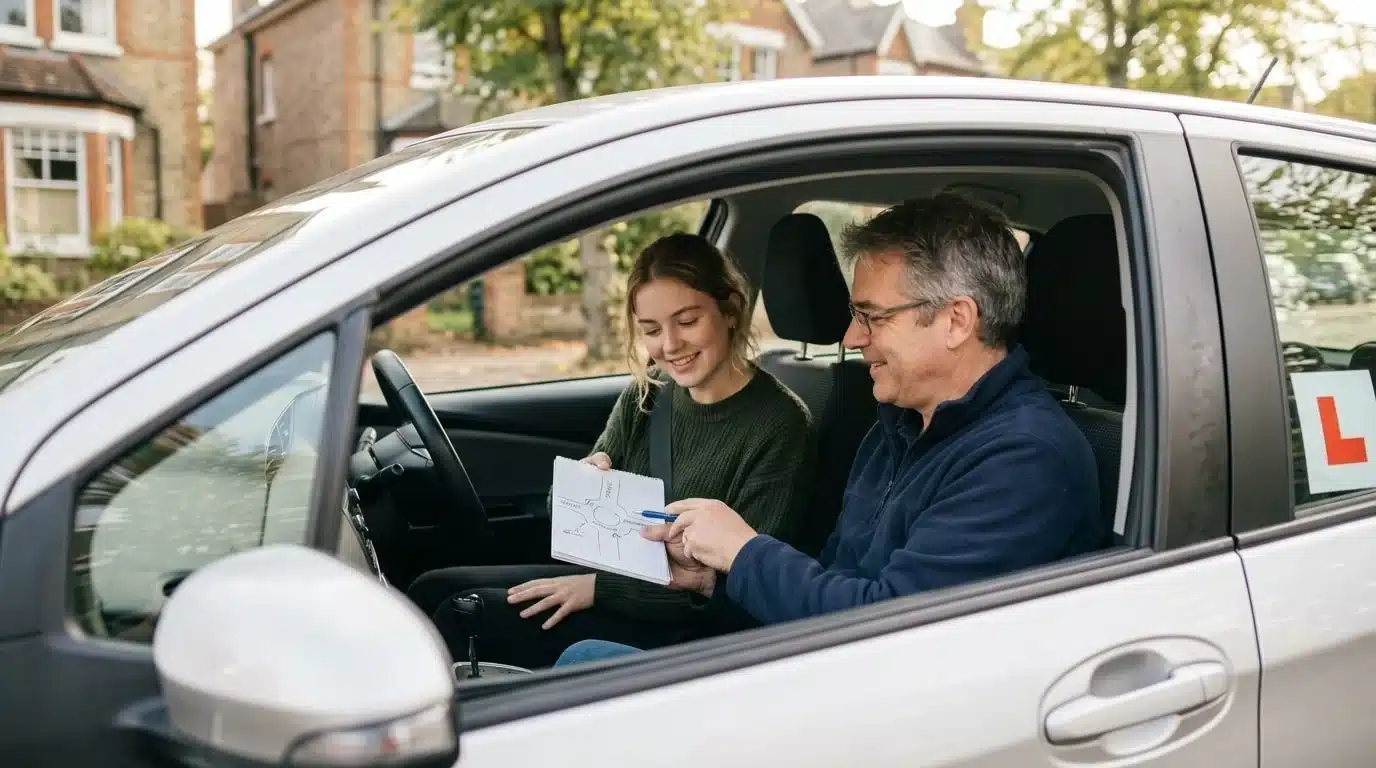
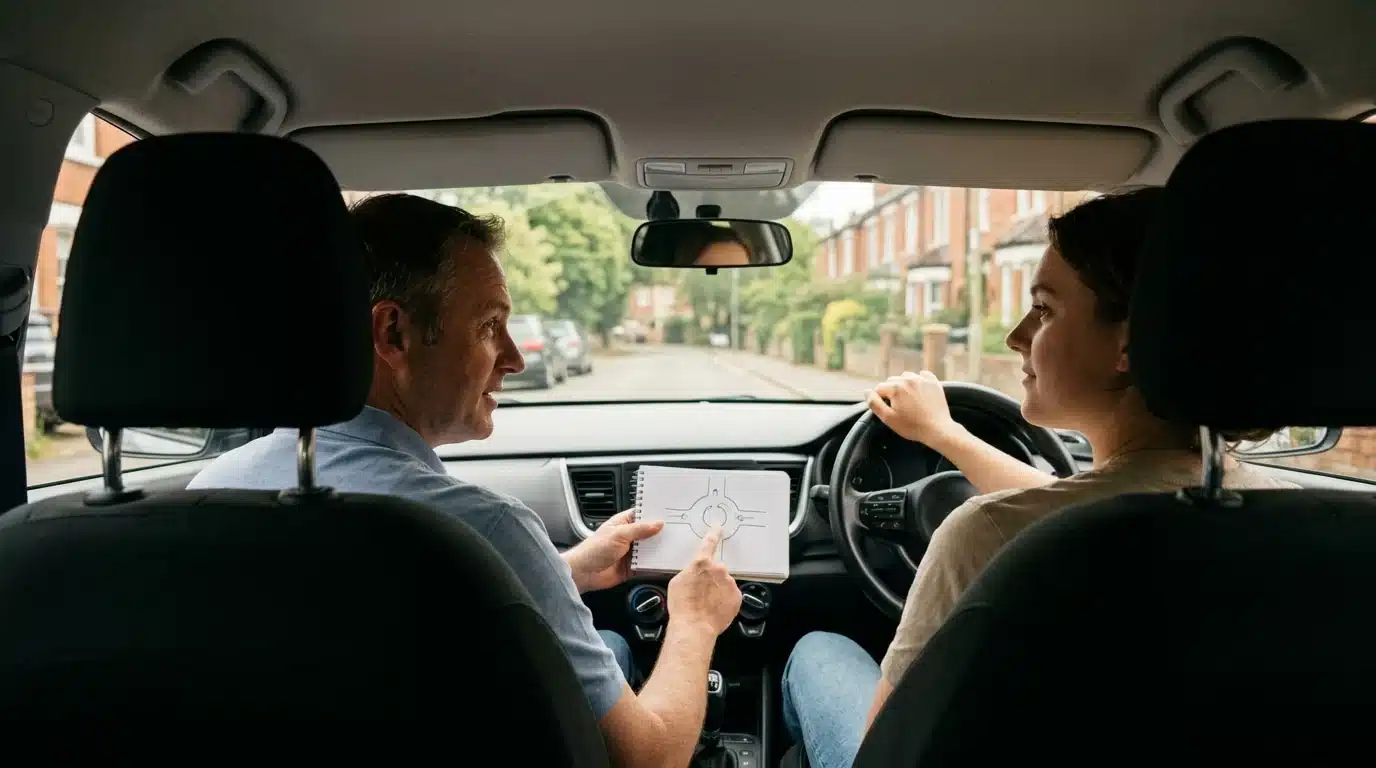
Our lessons run until 9pm on weekdays and through Saturday, so many winter lessons include some driving in the dark. We see that as useful. Driving at night with an instructor, before you are on your own, builds the habits that keep new drivers safe.
If ice or snow makes the roads dangerous, we will talk to you before your lesson about whether it should go ahead.
Already passed? Pass Plus includes driving at night and in all weathers. If you have not driven in the dark for a while, our refresher driving lessons in Oxford can help you get your confidence back.
If your driving test is in winter
Driving tests are not carried out in dangerous weather, such as icy roads, flooding, thick fog or high winds. If any of these happen on your test day, call the test centre. The number is on your booking confirmation email.
If your test cannot go ahead, the DVSA automatically books the next available date and sends you the details within 3 working days, or up to 7 days during a long spell of bad weather. You can change the new date if it does not suit you. You cannot claim back any costs when a test is cancelled because of the weather.
Our guide to the Oxford Cowley driving test centre has more about what to expect on the day.
Common questions
When do the clocks go back in 2026?
The clocks go back one hour at 2am on Sunday 25 October 2026, to 1am. They go forward again on Sunday 28 March 2027.
Will my driving test go ahead if it snows?
Not if the roads are icy or the weather is dangerous. Call your test centre on the day; the number is on your booking confirmation email. If your test cannot go ahead, the DVSA books the next available date and sends you the details within 3 working days, or up to 7 days during a long spell of bad weather.
When do I have to use headlights?
You must use headlights at night, except on roads with lit street lighting, and whenever visibility is seriously reduced, which generally means you cannot see more than 100 metres. You should also use dipped headlights at night in built-up areas and in dull daytime weather.
Can I have driving lessons in the dark?
Yes. Our lessons run until 9pm on weekdays, so in winter many evening lessons are partly in the dark. Practising night driving with an instructor is a good way to build confidence before you drive on your own.
Ready to keep learning through the winter? See our driving lesson prices in Oxford, or book your driving lessons online.