The Slade, Headington Quarry and Barton, the narrow road circuit
This circuit is about restraint rather than speed. It runs up through The Slade into the 20 mph streets of Headington Quarry, out along the A40 to Barton, then back through two of the narrowest residential roads on any Cowley route before returning down the Eastern Bypass. Around forty minutes.
You do not get to pick your circuit and you will not be told it in advance. All of them start on Hollow Way.
The route at a glance
- Starts and ends
- James Wolfe Road, OX4 2PY
- Time on the road
- About 40 minutes
- Areas covered
- Cowley, Headington Quarry, Barton
- Character
- Narrow roads and speed bumps
- Speed limits
- 20, 30 and the A40
- Manoeuvre
- Chosen during the drive, not fixed
The circuit, stage by stage
Five stages, in the order you drive them. The point of the diagram is that the second half of this route is the slow half, and knowing that changes how you pace the first.
Schematic. Distances, angles and junction shapes are not to scale.
Cowley test centre
Right out onto Hollow Way, first exit at the mini roundabout, then through The Slade.
Headington Quarry
Old Road, Quarry Road, Margaret Road and Wharton Road. Twenty miles an hour, speed bumps and a road that narrows.
London Road
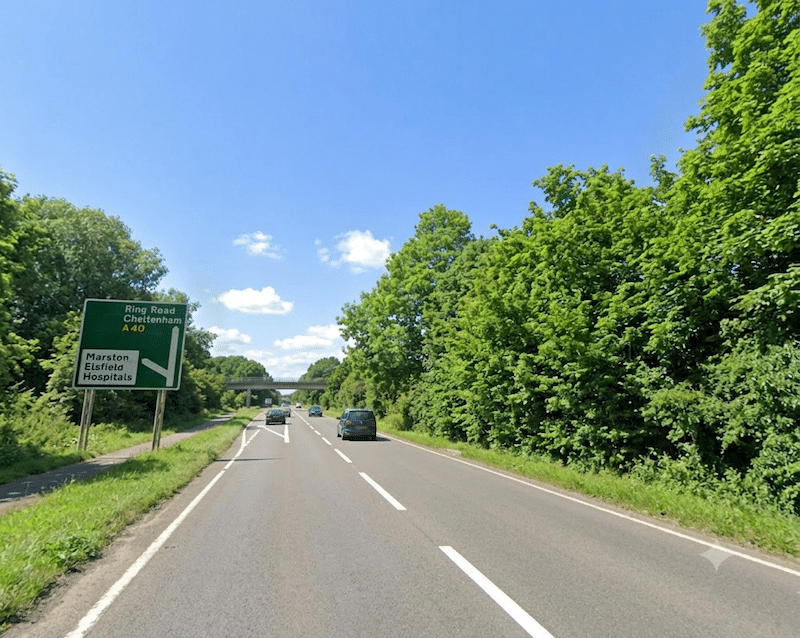
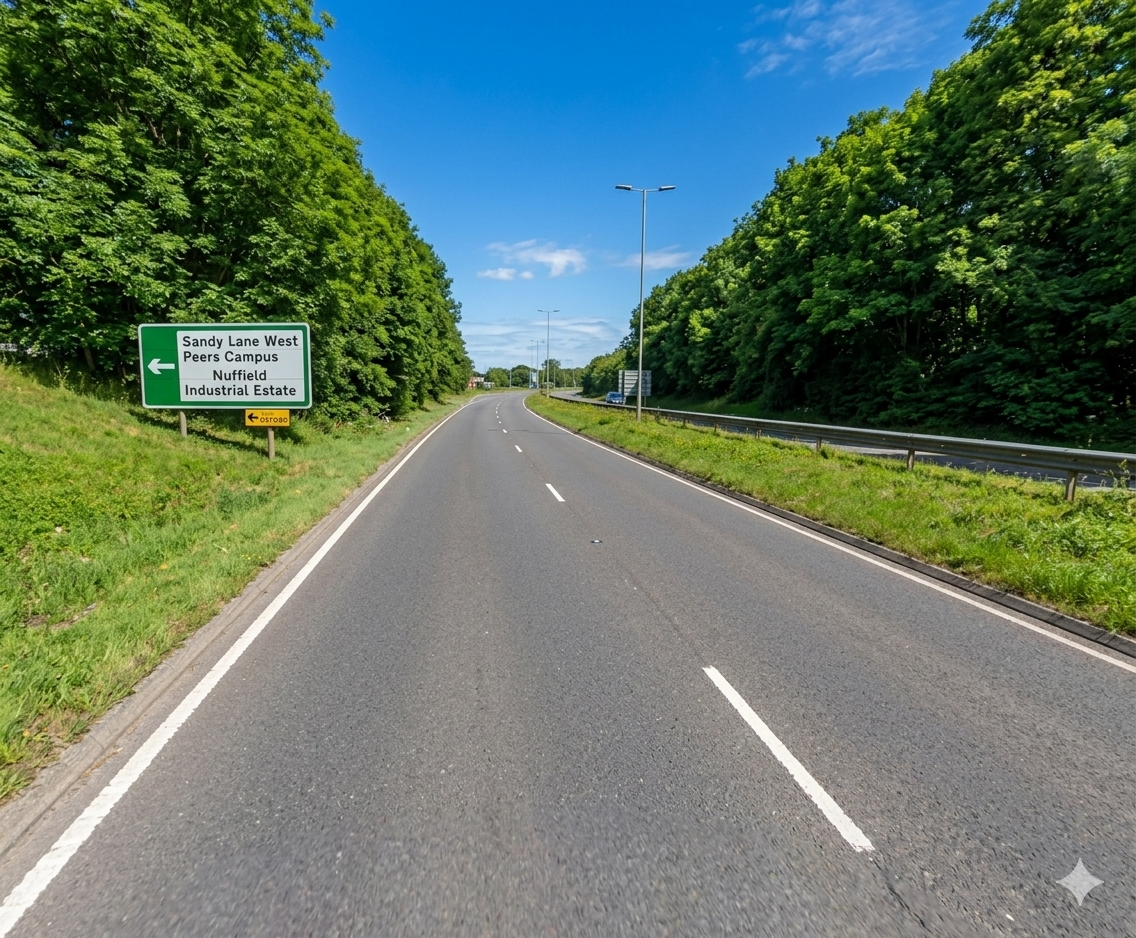
Right onto London Road, then the North Way roundabout and the first exit heading west onto the A40. The fastest road on the circuit.
Barton
Barton Fields Road, then Barton Village Road. A bus route with speed bumps, parked cars and a 20 mph limit throughout.
Headington roundabout
Edgecombe Road and Bayswater Road bring you to the roundabout, then the Eastern Bypass and Horspath Driftway back to Cowley.
Where this route takes its faults
This route does not test whether you can drive fast. It tests whether you can hold back, read a narrow road early, and stay smooth when the surface fights you.
Barton Village Road
A bus route with speed bumps, cars parked on the left and a 20 mph limit throughout. Oncoming vehicles use the same road.
Highway Code rule 215 is clear: give way to buses signalling to pull out where it is safe to do so. Position early and leave yourself room.
What the examiner sees: whether you planned for the bus or reacted to it.Margaret Road and the speed bumps
Margaret Road has speed bumps throughout. So does Barton Village Road.
Braking hard just before each bump and accelerating away sharply is the kind of uneven control that can attract a minor fault. Steady pace over the top is what you want.
What the examiner sees: smoothness, which is marked even when nothing goes wrong.Edgecombe Road
A narrow residential road with cars parked on the left. The road does not have room for two vehicles to pass in all sections.
If the parked cars are on your side, the oncoming vehicle has priority. Holding back is not hesitation, it is the correct decision.
What the examiner sees: how early you read the gap, not how tightly you squeeze through it.Wharton Road
Another road where you may meet oncoming vehicles in the narrower sections.
The pattern repeats all over this circuit. Look far enough ahead to choose your gap while you still have a choice.
What the examiner sees: forward planning on a road that punishes late decisions.The Headington roundabout light
The light in the middle of the roundabout is not for you on entry. It catches people on this approach.
Once you are on the roundabout, the lights do apply. Entry and circulation are two different things here.
What the examiner sees: whether you understood the junction or copied the car in front.The A40 heading west
The road is faster here than anything you have driven so far on this route, and it arrives straight after 20 mph streets.
Inappropriate speed on faster roads is a leading factor in serious collisions, and the examiner marks progress in both directions.
What the examiner sees: whether you can change gear mentally as well as mechanically.The two roads that decide this test
Barton Village Road and Edgecombe Road are the reason this circuit exists. Both are narrow, both have cars parked on the left, and both will put an oncoming vehicle in front of you. The decision is the same in each case, and it is made early or not at all.
Barton Village Road
20 mph, bus route, speed bumps
- The parked cars are on your side, so the oncoming vehicle has priority.
- Pick your gap early, while you still have several to choose from.
- Hold back in the gap rather than nosing out and blocking the road.
- If a bus is signalling to pull out, give way where it is safe. Highway Code rule 215.
Edgecombe Road
narrow, parked on the left
- The road does not have room for two vehicles to pass in all sections.
- Read the whole length of it, not the next twenty metres.
- Stopping to let someone through is never a fault. Meeting them halfway is.
- Move off again with proper observation rather than rolling straight away.
The full drive, turn by turn
Six legs, in driving order. Nothing on this list changes from test to test. What the examiner asks of you at each point is what you have already practised.
Out of the test centre
- Leave the test centre on James Wolfe Road and turn right onto Hollow Way. The limit is 30 mph.
- At the mini roundabout, take the first exit.
- Continue through The Slade.
Headington Quarry
- Turn right onto Old Road. The limit drops to 20 mph.
- Turn left onto Quarry Road.
- Turn left again onto Margaret Road, which has speed bumps throughout.
- Turn right onto Wharton Road, where you may meet oncoming vehicles in the narrower sections.
Onto London Road and the A40
- Turn right onto London Road. Back to 30 mph.
- At the roundabout on North Way, take the first exit heading west onto the A40.
- Take the slip road on the right to join Barton Fields Road.
Barton Village Road
- Turn right onto Barton Village Road.
- A bus route with speed bumps, cars parked on the left and a 20 mph limit throughout.
- Oncoming vehicles use the same road, so meeting situations are likely.
Edgecombe Road and Bayswater Road
- Turn left onto Edgecombe Road, narrow, with cars parked on the left.
- The road does not have room for two vehicles to pass in all sections.
- Turn right onto Bayswater Road.
The return to the test centre
- Reach the Headington roundabout from Bayswater Road. The light in the middle is not for you on entry.
- Join Eastern By-pass Road and take the slip road on the right for Horspath Driftway.
- At the mini roundabout on Horspath Driftway, take the first exit onto Hollow Way.
- Turn right onto James Wolfe Road to return to the test centre.
Narrow roads get easier the second time you drive them
Narrow roads are a confidence problem more than a skill problem. Driving these particular streets with someone beside you who knows where the pinch points are is what turns them from alarming into ordinary.
Or call 01865 763458. Monday to Friday 7am to 9pm, Saturday 9am to 6pm.- Hollow Way and the mini roundabout onto The Slade
- Old Road, Quarry Road and the 20 mph zone
- Margaret Road and staying smooth over the bumps
- Wharton Road and meeting oncoming traffic
- The North Way roundabout and joining the A40
- Barton Village Road, buses and all
- Edgecombe Road, the tightest road on the circuit
- The Headington roundabout light on entry
The stop sign and the narrow roads on this route catch people out, but the structure of the test is the same whichever way you are sent. Our guide to the Oxford (Cowley) test centre covers what to take with you, the three stops, the manoeuvre and how faults are marked.
Questions about this circuit
The things people want to know before driving this circuit for the first time.
Where does this Oxford driving test route start and finish?
The test starts and finishes at Cowley test centre on James Wolfe Road. The route covers Hollow Way, The Slade, Old Road, Quarry Road, Margaret Road, Wharton Road, London Road, Barton Village Road, Edgecombe Road, the Headington roundabout, and Horspath Driftway before returning to the start.
Is Barton Village Road on the Oxford driving test?
Yes. It is a bus route with speed bumps, parked cars, and a 20 mph limit. You may meet oncoming vehicles. Position early and leave yourself room for buses. This is one of the more demanding sections of the route.
What should I do if I make a mistake during the test?
Keep driving safely. A single error rarely fails a test unless it puts someone at risk. Recover, refocus, and drive the rest of the route as well as you can. Examiners record what they see from that point on, and they do not carry a single mistake forward.
How early should I arrive at Cowley test centre?
Ten minutes before your appointment. The examiner starts with a show me tell me question and a number plate check before you move. Being late does not delay the test, it just removes your settling in time.
Does the Oxford test include a manoeuvre?
Yes. Parallel park, pull up on the right and reverse back, or bay parking. The examiner chooses the time and location during the drive, not at a fixed point on the route.
How many faults can I get and still pass?
Up to 15 driving faults, and you will still pass. One serious or dangerous fault is a fail, as is the same fault repeated enough times to show a pattern.
Why does the Headington roundabout light catch people out?
The light in the middle of the roundabout is not for you on entry. Candidates approaching from Bayswater Road see it, treat it as theirs, and either stop when they should not or hesitate long enough to hold up the traffic behind them.
At a glance
This Oxford driving test route runs from the Oxford (Cowley) driving test centre at James Wolfe Road, Cowley, Oxford, OX4 2PY, and takes around 40 minutes. It leaves on Hollow Way, takes the first exit at the mini roundabout through The Slade, then covers Old Road, Quarry Road, Margaret Road and Wharton Road in Headington Quarry at 20 mph. It joins London Road, takes the first exit at the North Way roundabout heading west onto the A40, then Barton Fields Road and Barton Village Road, a bus route with speed bumps and a 20 mph limit. It returns via Edgecombe Road, Bayswater Road, the Headington roundabout, Eastern By-pass Road, Horspath Driftway and Hollow Way. The manoeuvre may be a parallel park, a pull up on the right and reverse back, or a bay park, chosen by the examiner during the drive. Examiners choose the route on the day and candidates are not told in advance. The DVSA practical test fee is 62 pounds on a weekday and 75 pounds in the evening, at the weekend or on a bank holiday, with tests from 4:30pm counting as evening. The theory test fee is 23 pounds. Up to 15 driving faults are allowed and one serious or dangerous fault is a fail. The earliest retest after a fail is 10 working days. Oxon Driving Tuitions teaches this route and the other circuits out of Cowley in manual and automatic cars, with lessons bookable online or on 01865 763458.
The examiner picks the route. You pick how ready you are.
Narrow roads are worth practising with someone in the passenger seat who has watched a few hundred learners get them wrong. Book a first lesson and we will start wherever you feel least sure.
Other circuits from Cowley: Marsh Lane Sandhills to Risinghurst Littlemore and Grenoble The Islip route